
Reactive Printing Thickener Manufacturer and Supplier in India: What Buyers Should Check
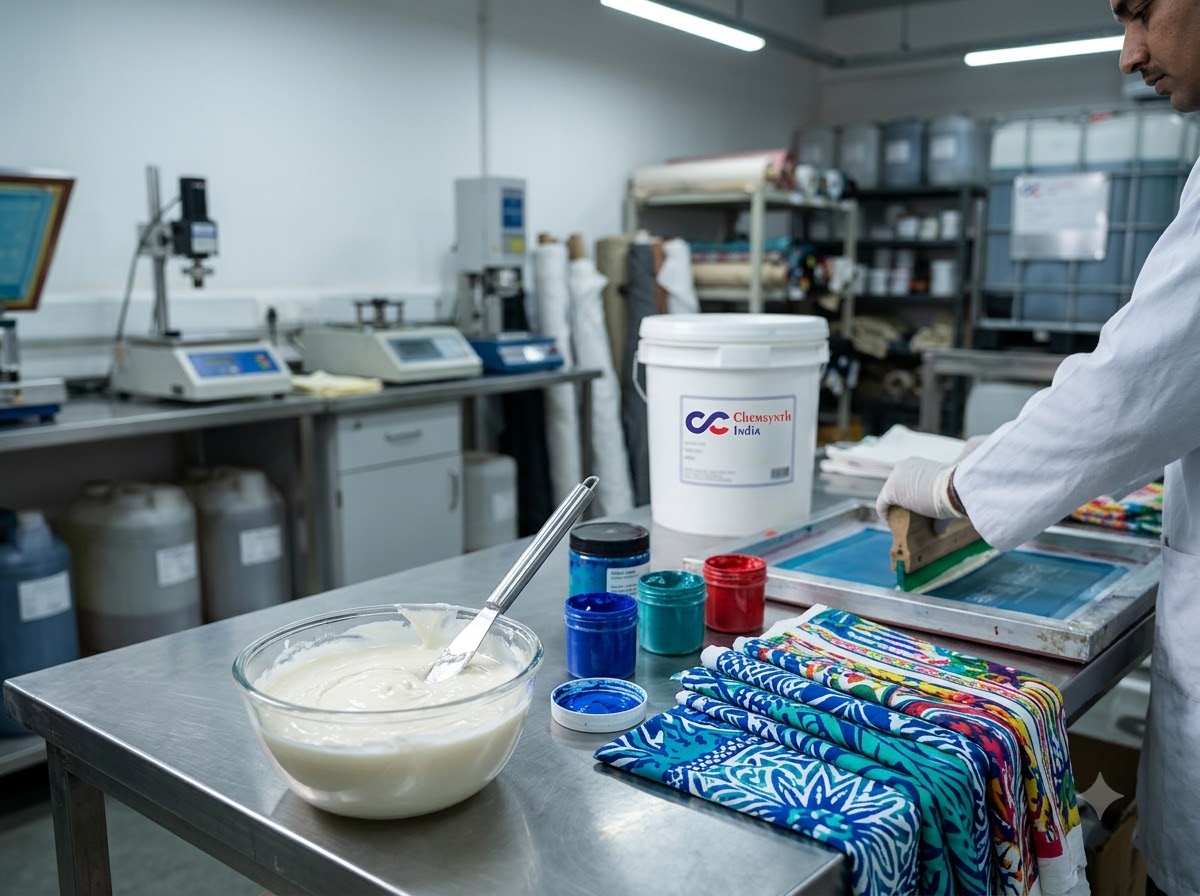
Choosing a reactive textile printing thickener manufacturer is not only a price decision. The thickener shapes how the print paste behaves on the screen and on the fabric, so it directly influences print definition, colour evenness and day-to-day production stability. This guide covers what printers and buyers should check before selecting a thickener and a textile chemical supplier in India.
Introduction to Reactive Textile Printing Thickener
A reactive printing thickener is added to a print paste containing reactive dyes, alkali and other auxiliaries. Its job is to turn a thin dye solution into a paste with controlled viscosity, so the colour stays where it is applied until it is fixed and washed off. Reactive dyes are widely used on cellulosic fabrics such as cotton and viscose, which is why thickener selection is a routine technical decision in many textile printing units.
Role in Printing Paste Viscosity and Print Definition
Viscosity and flow behaviour decide how a paste passes through the screen or rotary mesh and how far it spreads once on the fabric. A paste that is too thin can bleed and blur fine outlines. A paste that is too thick may print unevenly, block the screen or give poor penetration. A suitable thickener helps the printer achieve:
- Sharp outlines and clear detail in fine designs
- Even colour in solid areas and good levelness
- Adequate penetration into the fabric
- Stable paste viscosity during the print run
- Good wash-off, with a soft handle after washing
Important Factors When Selecting a Thickener
Before approving a thickener, buyers and technical teams should review the following points:
- Viscosity and solids specification: confirm the supplied range matches your recipe and printing method.
- Compatibility: the thickener should work with reactive dyes, alkali and the other auxiliaries in your paste.
- Paste stability: viscosity should hold over the working time of the print paste.
- Batch-to-batch consistency: repeatable quality avoids recipe adjustments and reprints.
- Wash-off and handle: easy removal after fixation supports clean whites and a soft hand.
- Documentation: technical data sheets, safety data sheets and certificate of analysis for each lot.
- Packaging and storage: suitable pack sizes and clear storage guidance.
Applications in Reactive Printing
Reactive printing thickeners are used in textile printing of cellulosic fabrics, including cotton and viscose, across both screen and rotary printing set-ups. Depending on the design, fabric and machine, printers may need different viscosity characteristics for fine line work, large solid areas or heavy coverage prints. Testing the thickener in your own recipe on your own fabric remains the most reliable way to confirm performance.
Product Selection and Supplier Considerations
Technical performance is only part of the decision. A dependable supplier also matters, because an interruption in thickener supply can hold up an entire print line. When shortlisting a textile chemical supplier, consider:
- Ability to supply to a consistent specification over repeat orders
- Availability and lead time for your required quantities
- Technical and commercial support when a recipe or process changes
- Clear documentation and labelling for domestic and export shipments
- Responsiveness to enquiries, samples and specification requests
Chemsynth India supplies specialty and industrial chemical raw materials to domestic and export customers, with a focus on consistent quality and dependable sourcing.
Looking for a reliable supply partner? Enquire about product specifications, availability and commercial requirements.
View Product Details → Send Your Enquiry →Frequently Asked Questions
What is a reactive printing thickener?
It is a chemical added to a reactive dye print paste to give it the viscosity and flow behaviour needed for sharp, even printing on cellulosic fabrics such as cotton and viscose.
Why does thickener choice affect print definition?
The thickener controls how the paste flows through the screen and how much it spreads on the fabric. Poor control can cause bleeding, blurred outlines, uneven colour or poor penetration.
What should I check before buying a printing thickener?
Check viscosity and solids specification, compatibility with alkali and reactive dyes, paste stability, batch-to-batch consistency, wash-off, packaging, documentation and the supplier's ability to maintain supply.
Can I request specifications and availability before ordering?
Yes. Share your printing method, fabric type and quantity requirement through our enquiry page, and our team will respond with product specifications, availability and commercial details.