
How to Choose Cationic Softener Flakes for Cotton, Knits and Denim Fabric Finishing
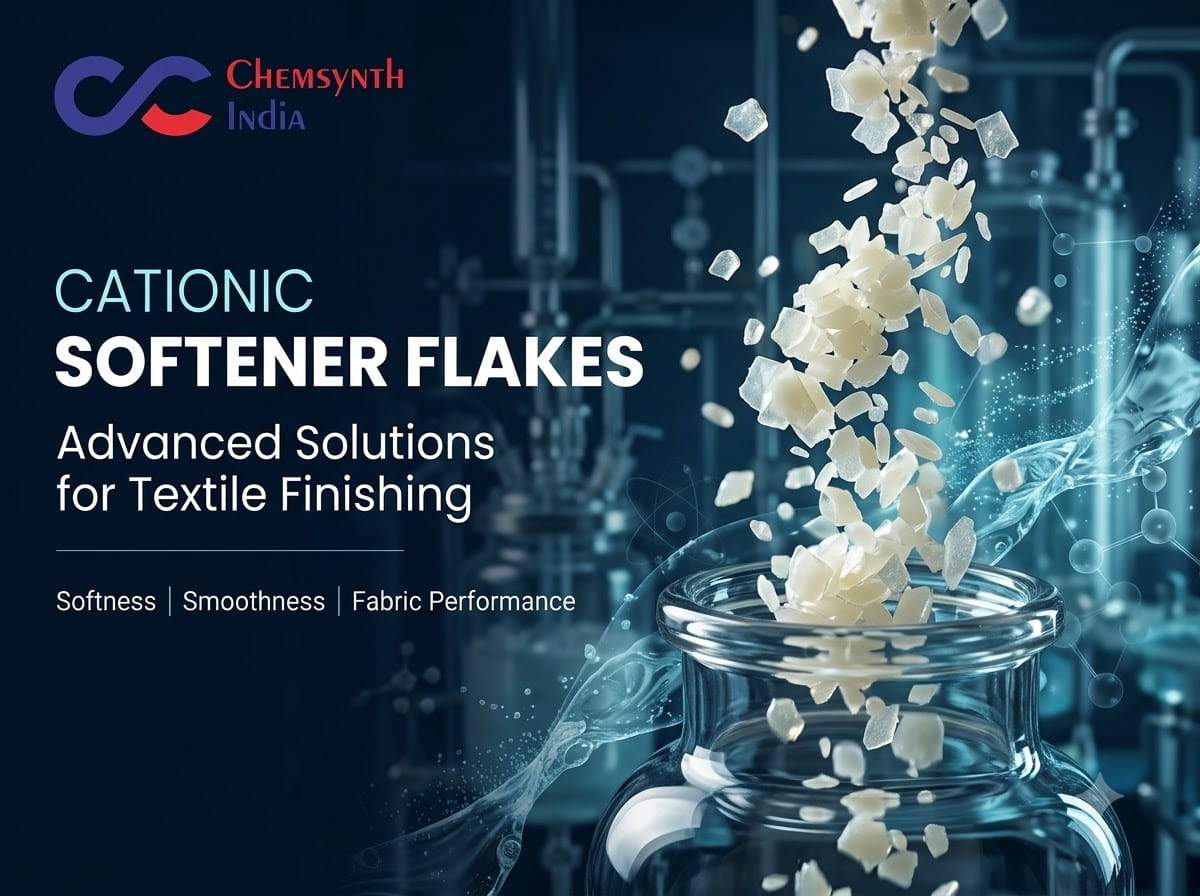
Fabric handle is one of the first things a buyer notices, and it is often decided in the finishing stage. For mills, knitters and denim washing units, choosing the right cationic softener flakes affects softness, static control and shade stability. This guide explains how these products work, where they fit, and what to check before you place an order with a cationic softener manufacturer or supplier.
Understanding Cationic Softener Flakes in Textile Processing
Cationic softeners are surface-active textile softening agents that carry a positive charge. Most textile fibres, especially cotton and other cellulosics, carry a slight negative charge in water, so the cationic molecule is drawn to the fibre surface and deposits there. Its water-repelling fatty portion then lubricates the surface, which is what the hand perceives as softness.
The flake form is a solid, easy-to-handle presentation of the product. Flakes are generally dissolved or dispersed in water before use, and the exact method depends on the grade. Always follow the technical data sheet (TDS) for your specific product.
Why Textile Manufacturers Use Cationic Softener Flakes
- Softness and smoothness: reduced friction between fibres and yarns.
- Better fabric handle: a fuller, smoother feel for cotton and knits.
- Antistatic effect: lower static build-up during processing and wear.
- Improved surface feel: useful for garments that are handled and inspected by hand.
- Range of uses: adaptable to several fibres and process routes, subject to trials.
Applications of Cationic Softener Flakes
Cotton fabric finishing: a softener for cotton fabric is typically applied after dyeing or printing to restore the handle lost during scouring, bleaching and wet processing.
Knitted fabrics: knits such as single jersey and fleece benefit from a smooth, supple feel. Because knits are stretched and handled heavily on machines, a softener that also reduces surface friction can help in downstream processing.
Denim garment washing: a softener for denim processing is commonly added in the final wash stage to soften stiff, heavily treated denim. Since denim is often indigo-dyed or specially washed, test for any effect on shade before bulk runs.
Viscose and rayon: these regenerated cellulosics are soft but can feel limp or slippery, so the target finish may differ from cotton.
Synthetic and blended textiles: cationic products can be used on some synthetics and blends, but results vary with fibre type and desired finish. Confirm the suitability in the supplier's documentation and in a trial.
Cationic vs Nonionic vs Silicone Softener
No single softener suits every fabric or process. The table below gives a general comparison; actual performance depends on the specific grade and your process.
| Parameter | Cationic | Nonionic | Silicone |
|---|---|---|---|
| Softening performance | Commonly used for effective softening on cellulosics | Moderate to good, depending on the grade | Often chosen for a high level of softness; varies by type |
| Fabric feel | Smooth, supple handle | Soft, natural handle | Slippery, silky handle |
| Antistatic properties | Generally provides antistatic action | Limited, grade dependent | Grade dependent |
| Compatibility | Can be incompatible with anionic products; may affect shade or whiteness | Generally tolerant of other chemicals in the bath | Depends on emulsion type; check stability in the bath |
| Typical applications | Cotton, knits, denim washing, viscose | Applications needing bath compatibility or minimal shade effect | Premium finishes, many fibre types |
How to Select the Right Cationic Softener Flakes
- Fabric composition: cotton, knits, denim, viscose and blends may each need a different grade.
- Desired softness and finish: define the handle target before testing.
- Hot-water or cold-water solubility: check how the grade dissolves, and whether your plant can handle it.
- Processing method: exhaust, padding or garment washing may call for different products.
- Compatibility: verify with other textile finishing chemicals in the bath, especially anionic products.
- Yellowing and shade change: important on whites, pastels and certain dyed or indigo shades.
- TDS and safety documentation: request the TDS and SDS before approval.
Processing Considerations for Textile Manufacturers
Preparation and application details differ by product, so use only the guidance in the manufacturer's TDS rather than general rules of thumb. In practice, mills usually cover four points:
- Dissolution: prepare the flakes as directed by the supplier before adding them to the bath.
- Bath preparation: add the prepared softener at the stage recommended for your process.
- pH: confirm the pH range recommended for the product, since it influences stability and fibre deposition.
- Compatibility testing: run a small lab or bulk trial with your actual fabric and chemicals to check handle, shade, absorbency and bath stability.
What Textile Buyers Should Check Before Choosing a Supplier
- Product consistency: repeat orders should perform the same way.
- Technical specifications: clear, written specifications for the grade.
- Batch quality: batch-wise quality control and traceability.
- Packaging: pack sizes and labelling suited to your handling and storage.
- COA and SDS availability: documents provided with shipments or on request.
- Technical support: help with trials and troubleshooting.
- Supply reliability: lead times and availability for repeat requirements.
Why Choose Chemsynth for Textile Finishing Chemicals?
Chemsynth India Sourcing Pvt Ltd is a Mumbai-based chemical supplier serving domestic and export customers with specialty and industrial chemical raw materials. If you are looking for a textile chemical manufacturer in India or a dependable cationic softener flakes supplier, our team can share product information, documentation and commercial terms based on your requirement. You can also explore our cationic surfactants, nonionic surfactants, emulsifiers and industrial chemicals, or read our guide on textile auxiliaries for efficient fabric processing.
Need cationic softener flakes for your finishing line? Share your fabric type, process and quantity to receive product information and a quotation.
View Product Details → Request a Quotation →Frequently Asked Questions
What are cationic softener flakes used for?
They are used in textile finishing to improve softness, smoothness and handle, and to reduce static build-up on fabrics and garments.
Are cationic softener flakes suitable for cotton fabrics?
Yes, cationic softeners are commonly used on cotton and other cellulosic fabrics. The right grade depends on the desired handle, the process and compatibility with other chemicals, so confirm with the TDS and a trial.
Can cationic softeners be used in denim processing?
They are commonly used in denim garment washing to give a soft feel. Because they can affect shade or whiteness, run a small trial on your own denim and wash sequence first.
What is the difference between cationic and nonionic softeners?
Cationic softeners carry a positive charge and are attracted to negatively charged fibres, while nonionic softeners carry no charge and are generally more tolerant of other chemicals in the bath. The better choice depends on fabric, process and the finish required.
Are cationic softener flakes suitable for synthetic fabrics?
They can be used on some synthetic and blended fabrics, but results vary with fibre type and finish requirement. Check the supplier's technical documentation and trial before bulk use.
What factors should be considered before selecting a textile softener?
Consider fabric composition, the desired handle, dissolution and application method, compatibility with other finishing chemicals, yellowing or shade-change risk, and the availability of technical data and safety documents.